

 Char Rajibpur
Char Rajibpur(Upazila)
Char Rajibpur is an important upazila of Kurigram district, locally known simply as 'Rajibpur'.
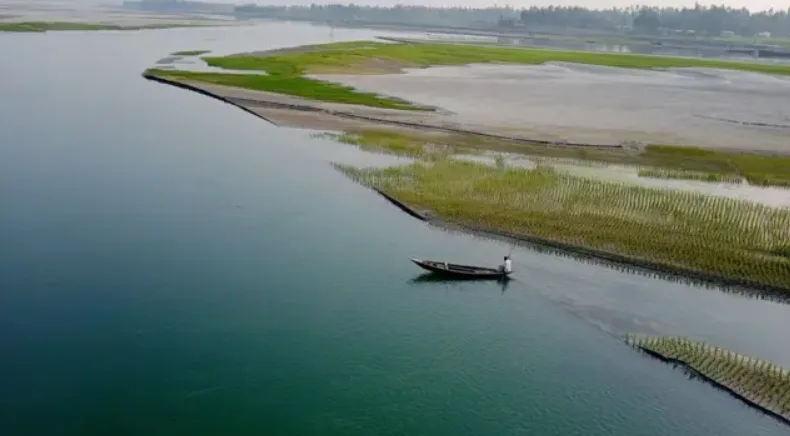
Situated in the basin of the Brahmaputra River, this region is geographically surrounded by rivers and rich in alluvial soil.
It is located approximately 60 kilometers from the Kurigram district headquarters, and the primary means of transportation is a combination of waterways and roadways.
While boats are the main mode of transport during the monsoon season, travel by road is possible during the dry season.
Among the notable sights here are the vast waters of the Brahmaputra River and the natural beauty of the char (river island) areas.
Although the upazila is not home to any nationally famous figures, it is known for its agriculture-based economy and river-centric lifestyle.
While locals may refer to it by various names for administrative and business purposes, it is officially recognized as Char Rajibpur.
The lifestyle and culture of the people here serve as a unique example of survival through resilience against the challenges posed by the river and the char landscape.
Char Rajibpur Upazila is an administrative area of Kurigram District, Bangladesh. It is locally known as Rajibpur Upazila. Bir Pratik Taramon Bibi, a female title holder of Bangladesh, was born in this upazila. The first border hat of Bangladesh, Baliamari-Kalairchar Border Hat, is located in this upazila. Location and Area Geographically, this upazila is on the Jamalpur border and separated from the main land of Kurigram District by the Brahmaputra River. There are about 30 small and large chars in this upazila. Its area is 111.032 square kilometers. To the north of Rajibpur Upazila are Roumari Upazila and Chilmari Upazila and the Brahmaputra River, to the south are Dewanganj Upazila of Jamalpur District and Gaibandha Sadar Upazila of Gaibandha District and the Brahmaputra River, to the east are the Indian states of Assam and Meghalaya, to the west are Sundarganj Upazila of Gaibandha District. History Rajibpur Thana was established in 1977, later it emerged as Char Rajibpur Upazila in 1983. Geographically, the people of Dangdhara and Char Amkhawa Unions of Dewanganj Upazila of Jamalpur district are centered in Rajibpur Upazila. History of the Liberation War On August 4, 1971, the Pak army captured Kodalkati. On August 13, the Mukti Bahini engaged in a fierce battle with the Pak army, the Pak army retreated in disarray. On October 2, the Pakistani army fought a fierce battle with the freedom fighters in Kodalkati and Shankar Madhabpur, where 100-150 Pakistani soldiers were killed due to the bravery of the freedom fighters. Later, on October 4, Kodalkati, also known as Rajibpur, was liberated by the escape of the Pak army. The massacre of Shankar Madhabpur The village of Shankar Madhabpur was under Roumari Thana of the then greater Rangpur district (now Kurigram district)… It included 8 unions: Belgachha, Bhogdanga, Ghogadaha, Holokhana, Jatrapur, Kanthalbari, Mogalbasa, Panchgachhi.
Rajibpur police station was established in 1977, and later became Char Rajibpur Upazila in 1983. Geographically, the people of Dangdhara and Char Amkhawa unions of Dewanganj upazila of Jamalpur district are centered in Rajibpur Upazila.
💬Comments(0)
✏️Leave a Comment